
Trust has emerged as the most valuable commodity in the fiercely competitive digital industry, where many brands compete for consumers’ attention. It takes more than simply creative advertising or a visually appealing website for firms to build that trust. Today’s consumers base their purchasing decisions on social proof, a psychological phenomenon in which people imitate the behaviours, viewpoints, and suggestions of others.
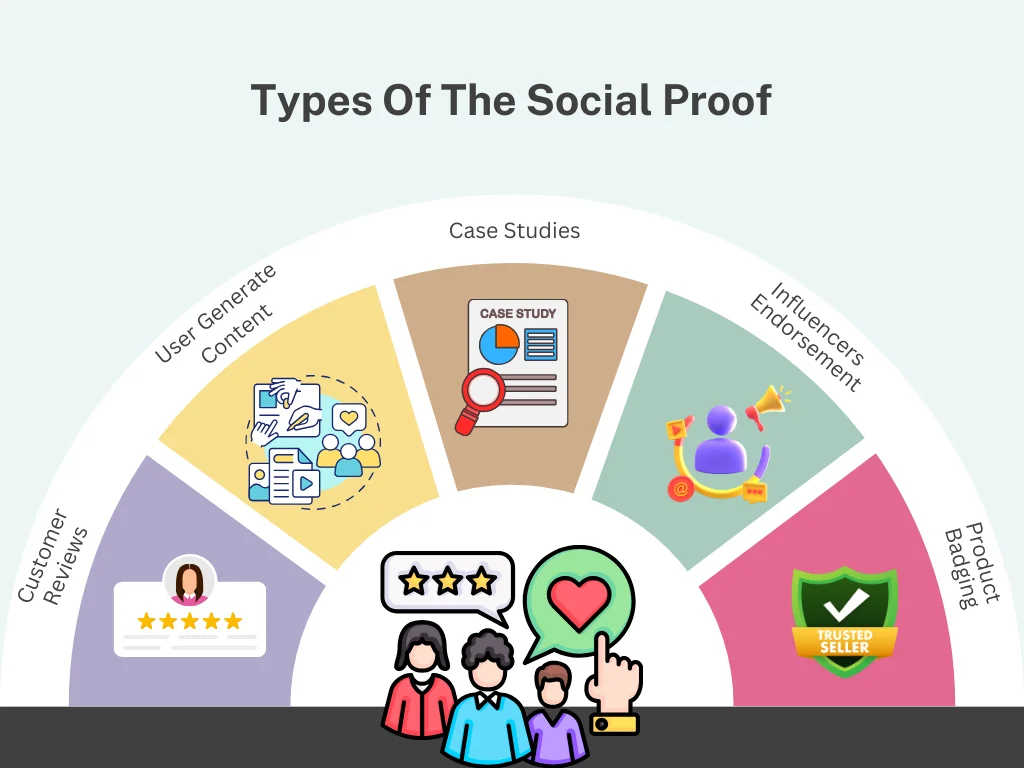
Social proof can take many different forms, such as case studies, influencer endorsements, and consumer reviews. These resources reassure prospective customers that they are making the proper decision by validating your brand and merchandise. Let’s examine how each form of social proof affects customer behaviour and how your company may use these tactics to increase conversions and foster trust.
What is Social Proof and Why Does It Matter?
The idea of social proof has psychological roots. It’s the notion that, particularly in ambiguous circumstances, people seek guidance from others on how to act or what to decide. Social proof in marketing uses the strength of peer approval to sway consumer choices.
This explains why it works:
1. Lessens Decision Fatigue: Consumers spend less time and effort evaluating products because they trust the advice and experiences of others.
2. Establishes Credibility: Your brand gains validity when you see favourable reviews from actual customers, authorities, or influencers.
3. Strengthens Brand Trust: Social proof gives consumers more assurance about their purchases by fostering a feeling of authenticity and dependability.
The Role of Reviews in Building Trust
One of the strongest types of social evidence is found in online reviews. 93% of buyers, according to studies, read reviews before making a purchase, and products with high ratings have a much higher conversion rate.
The Reasons Reviews Are Effective
• Authenticity: Reviews are reliable since they are provided by actual customers who have utilised the product.
• Emotional Connection: Reading about other people’s experiences enables prospective customers to empathise with their tales.
• Quantity and Quality: While thorough evaluations offer more in-depth insights, a high number of favourable reviews indicates general contentment.
How to Leverage Reviews
1. Encourage Customers to Write Reviews: Send automated emails to customers requesting reviews of your goods or services following each transaction.
2. Evaluations of Features prominently: Display client endorsements on email campaigns, landing pages, and product pages.
3. Address Input: Respond to reviews, both favourable and unfavourable. Transparency and concern are demonstrated by openly acknowledging problems and finding solutions.
4. Make Use of Third-Party Platforms: Since Yelp, Google Reviews, and Trustpilot are not affiliated with your company, they offer extra credibility.
Real-World Example
Amazon is really good at using reviews. Every product listing has user-uploaded photos, thorough reviews, and consumer ratings, giving buyers all the information they need to make wise selections.
Influencers: The Power of Persuasion
Influencer marketing has emerged as a key component of social proof in the current digital era. Influencers—individuals with a loyal following—can drive purchasing decisions by supporting your brand or product.
Why Influencer Marketing Works
• Relatability and Trust: Followers view influencers as relatable role models and have faith in them. Compared to regular advertisements, their recommendations seem more sincere.
• Targeted Reach: Influencers frequently serve specialised audiences, giving companies access to particular groups of people.
• Social Media Amplification: Influencers produce material that may be shared, increasing the visibility of your business on various channels.
Types of Influencers
• Mega-influencers are celebrities with millions of followers. They are good for broad reach but may lack relatability.
• Micro-influencers are individuals with 10,000-50,000 followers who specialise in particular themes. Their audiences are typically extremely engaged and trust their advice.
• Nano-Influencers: Individuals with a modest following (1,000-10,000) but strong feeling of community. Their endorsements are personal and genuine.
How to Use Influencers Effectively
1. Choose the Right Influencer: Match their niche and ideals to your brand. For example, a fitness brand would profit from collaborating with a health-conscious influencer.
2. Prioritise Authenticity: Partner with influencers who actually enjoy and use your items, as their audience can detect false advertisements.
3. Create campaigns with specific goals. Set clear objectives for your influencer engagements, whether they are to drive sales, raise brand awareness, or promote a product introduction.
4. Track ROI with unique discount codes or affiliate links for influencer programs.
Real-World Example
Fashion brand Revolve has perfected influencer marketing. Collaboration with fashion bloggers and social media stars allows the business to continually reach its target market while maintaining an aspirational image.
Case Studies: Proof That Your Product Works
Case studies go beyond reviews, providing detailed, data-driven examples of how your product or service has generated benefits for real customers. They’re especially useful for B2B companies and high-ticket products, when purchasers require more precise proof of value.
Why Case Studies Work
• Credibility: Demonstrating real-world applications of your product with measurable results.
• Case studies build emotional connections with potential buyers through intriguing storytelling.
• Demonstrating expertise involves solving challenges and delivering tangible results.
How to Create an Effective Case Study
1. Find Success Stories: Pick clients or consumers who have used your product or service to accomplish noteworthy outcomes.
2. Make Use of Data and Metrics: Provide specific figures to quantify the outcomes (e.g., “Increased ROI by 200% in six months”).
3. Put Your Case Study in Order:
o The Challenge: Explain the issue your client was having.
o The Solution: Describe how your offering resolved the problem.
o The Results: Use visual aids such as graphs or charts to emphasise the results.
4. Incorporate Customer Testimonials: To give a personal touch, include quotes from the client.
5. Make it Visually Appealing: To break up material and keep readers interested, use infographics, images, and videos.
Real-World Example
In case studies, HubSpot shines. Their collection of customer success stories showcases a variety of sectors, providing relatable examples for potential customers and showcasing the platform’s adaptability.
Combining Social Proof for Maximum Impact
To establish credibility and trust, the most successful brands combine several types of social proof. You can combine these tactics as follows:
1. Combine Influencer Campaigns with consumer Reviews: To produce a multifaceted story, combine influencer endorsements with consumer reviews.
2. Convert Case Studies into Shareable Content: To reach a larger audience, repurpose case studies into blog entries, films, or infographics.
3. Promote user-generated content, or UGC: Encourage clients to produce material that highlights your product, such as images or videos. For more authenticity, post this material on your social media platforms.
Measuring the ROI of Social Proof
Monitor these indicators to learn how social proof affects your company:
• Conversion Rates: Calculate the proportion of users who finish a purchase following their interaction with social proof material.
• Traffic Sources: Determine which traffic comes from case studies, influencer campaigns, or reviews by using analytics tools.
• Engagement Rates: Monitor social proof-driven content’s likes, shares, comments, and saves.
Final Thoughts
Social proof is now necessary for establishing credibility, differentiating oneself from rivals, and increasing conversions. You can show your audience how valuable and genuine your brand is by using case studies, influencers, and reviews to your advantage.
Collect reviews and find influencers in your niche to start small. Track your performance indicators and provide in-depth case studies as your social proof plan develops. These initiatives will eventually increase revenue and cultivate enduring consumer loyalty.