
Customers increasingly want firms to understand their needs, predict their preferences, and offer highly customised experiences in today’s fast-paced digital world. The days of universal marketing strategies are passed; modern consumers need relevance, interactivity, and immediacy. Because of this shift, the marketing approach known as hyper personalization, which is fuelled by advanced technology like artificial intelligence (AI), has started.
Hyper personalization goes beyond standard personalisation strategies by leveraging real-time data, machine learning, and predictive analytics to create tailored experiences at every touchpoint of the consumer journey. This blog will discuss how AI is changing marketing, the benefits and challenges of hyper personalization, and how businesses may use this powerful tool to rethink customer experiences.
What is Hyper personalization?
Hyper personalization is the process of creating extremely relevant and specialised client experiences utilising AI and real-time data. Hyper personalization goes further than conventional personalisation, which can involve calling clients by name or dividing audiences into demographic groups. It considers:
• Behavioural information (such as past browsing and purchasing trends)
• Contextual information, such as location and time of day
• Psychographic information, such as values and interests
A hyper-personalized email from an online store, for example, can offer items not only based on your previous purchases but also on the weather where you are right now or an event you have planned.
The Role of AI in Hyper personalization
Hyper personalization is fuelled by artificial intelligence. It is essential for contemporary marketing because of its real-time, massive data analysis capabilities, which allow it to see trends that humans might overlook. The following are some significant ways AI drives hyper personalization:
1. Predictive Analytics
AI systems forecast future consumer behaviour based on historical data. For instance, based on previous interactions, AI may predict which products a customer is likely to buy next or when they might need to place a new order.
2. Dynamic Content Generation
Marketers may now provide dynamic content based on user choices thanks to AI. AI makes sure that the content matches the individual profile of the user, whether it is through targeted advertisements, product recommendations, or personalised online experiences.
3. Chatbots and Virtual Assistants
AI-powered chatbots comprehend customer enquiries and provide contextually appropriate answers to provide individualised support. A chatbot on a travel website, for instance, can recommend holiday packages depending on the user’s spending limit and previous travel destinations.
4. Real-Time Adaptation
Because AI systems can process data in real time, marketers may make quick changes to their campaigns. For example, an AI-powered advertisement may alter its content based on the user’s surfing habits or the time of day.
How Hyper personalization Redefines the Customer Journey
The consumer journey is now a dynamic, multi-channel experience rather than a linear one. Every touchpoint is optimised for maximum impact through hyper personalization, which raises engagement and loyalty. Here’s how it changes important phases of the trip:
1. Awareness Stage
Customers are simply learning about a brand at the awareness stage. AI ensures that users see information that aligns with their interests by delivering highly targeted advertisements based on their online behaviours. Programmatic advertising networks, for instance, utilise AI to show prospective buyers tailored advertisements when they browse social media or search engines.
2. Consideration Stage
Customers are currently weighing their options. AI is able to examine their behaviour and offer tailored comparisons, reviews, and product suggestions. To foster trust and sway decisions, hyper personalized email campaigns can include pertinent case studies or testimonies.
3. Purchase Stage
Hyper personalization makes the purchasing process easier. Recommendation engines and other AI-powered tools can make recommendations for related products, and dynamic pricing algorithms can provide tailored discounts or promotions.
4. Retention Stage
Hyper personalization guarantees that clients remain involved after making a purchase. Artificial intelligence (AI) systems can suggest subscription plans based on user preferences, distribute personalised material to promote product usage, and send reminders for repeat purchases.
5. Advocacy Stage
Brand supporters can be loyal customers. These champions can be found by AI, and through user-generated content campaigns or referral programs, they can be encouraged to share their experiences.
Benefits of Hyper personalization
1. Improved Experience for Customers
Hyper personalization produces a smooth and delightful consumer experience by presenting offers and content that seem specially customised.
2. Enhanced Involvement and Allegiance
Customers are more inclined to interact with a company and stick with it over time when they feel heard. They feel appreciated when they receive tailored offers and advice.
3. A higher return on investment
Because hyper personalized campaigns connect with the audience better, they frequently result in higher conversion rates. Brands may optimise their marketing expenditures by delivering the appropriate message to the right consumers at the right moment.
4. A competitive edge
Hyper personalization can differentiate a brand in a crowded market by providing outstanding value and relevance.
Challenges of Hyper personalization
Hyper personalization has drawbacks despite its many benefits:
1. Privacy Issues with Data
Concerns around consent and privacy are brought up by the collection and use of personal data. To preserve trust, brands need to make sure that laws like the CCPA and GDPR are followed.
2. Cost and Complexity
Smaller firms may find it difficult to implement AI-driven hyper personalization because it necessitates a large investment in both technology and expertise.
3. Dangers of Over-Personalization
Finding the ideal balance is essential. Excessive personalisation might make customers feel uncomfortable and intrusive.
4. Accuracy of Data
The correctness of the data determines how well hyper personalization works. Inaccurate or out-of-date data can lead to recommendations that are unrelated or deceptive.
How to Implement Hyper personalization in Your Marketing Strategy
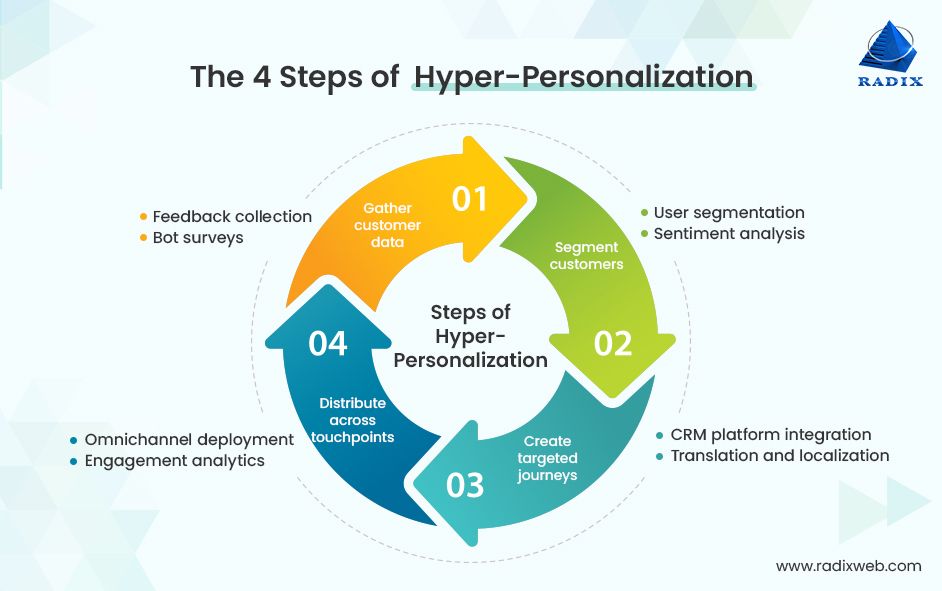
1. Make Use of Cutting-Edge AI Tools: Make an investment in AI systems that can produce insights, analyse data, and provide real-time, tailored content.
2. Emphasis on First-Party Data: Give priority to gathering and using first-party data via surveys, subscriptions, and direct contacts in light of the tightening regulations on third-party cookies.
3. Segment and Analyse: Using contextual and behavioural data, AI may be used to generate detailed client segments.
4. Test and Optimise: Keep testing highly customised ads and use AI-powered insights to improve your approach.
5. Preserve Transparency: Explain to clients how their information is gathered and put to use. Provide something of value in return, like special deals or tailored advice.
Conclusion
AI-powered hyper personalization is revolutionising marketing by producing specialised experiences that have a profound impact on customers. Even if there are obstacles like data privacy and implementation complexity, when done properly, the advantages greatly exceed the risks.
Brands that embrace hyper personalization will not only stay ahead of the curve but also cultivate stronger relationships with their audience as consumer expectations continue to change. Marketers can create experiences that are engaging, relevant, and meaningful by using AI to rethink the customer journey. This will lead to long-term success.
The time has come to use AI’s potential and use hyper personalization to advance your marketing plan. Both your bottom line and your customers will appreciate it.