
How Real-Time Bidding (RTB) Enhances Ad Efficiency in Performance Marketing
Smarter, quicker, and more accurate ways to reach target audiences are already the norm in digital advertising. Real-Time Bidding (RTB) is one of these developments that has changed the game. RTB makes sure that advertisers can reach the right audience at the right time by enabling real-time auctions for ad impressions, which maximises ROI and optimises ad efficiency.
The basics of RTB, its function in performance marketing, and how it improves ad campaign efficiency will all be covered in this blog.
What is Real-Time Bidding (RTB)?
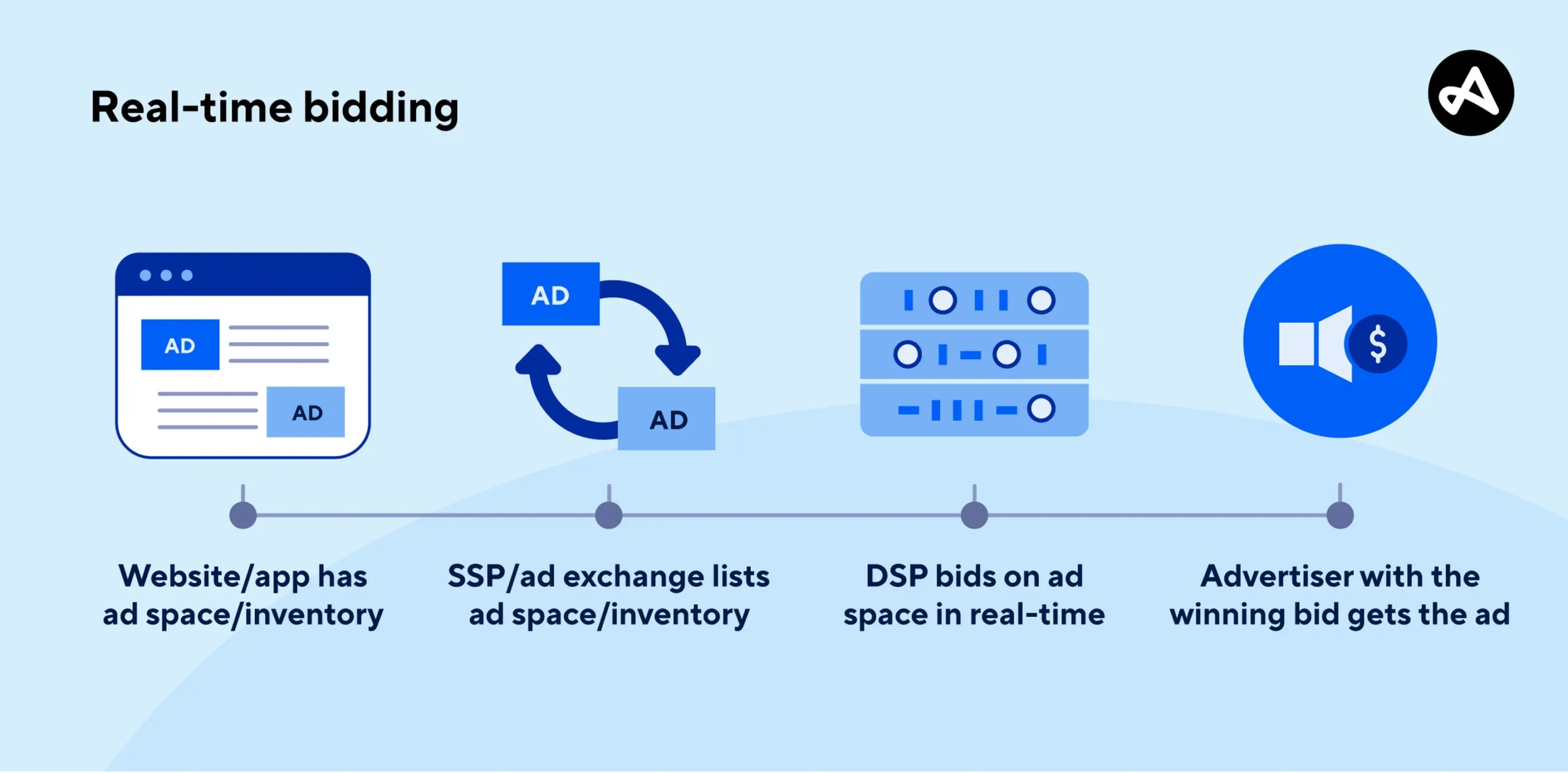
Real-time bidding is a programmatic advertising technique in which advertisers place real-time bids on ad impressions. The milliseconds it takes for an app or webpage to load are when this process takes place. RTB is probably the underlying technique if you’ve ever questioned why a highly relevant advertisement shows up practically immediately after visiting a website or app.
The Role of RTB in Performance Marketing
Performance marketing focuses on achieving measurable results, such as clicks, conversions, and sales. RTB aligns perfectly with these goals by offering unparalleled precision and efficiency.
Key Features of RTB in Performance Marketing
- Extremely Focused Marketing
RTB targets audiences based on a variety of factors, including location, behaviour, and demographics, by utilising large datasets. This minimises wasted impressions by ensuring that advertisements are displayed to users who are most likely to interact with them.
- Allocation of the Budget Dynamically
Budgets can be dynamically allocated by advertisers, who can bid more for worthwhile impressions and less for less relevant ones. ROI is improved by this flexibility.
- Optimisation in Real Time
Real-time campaign performance analysis via RTB platforms enables marketers to rapidly modify bids and tactics to optimize effectiveness.
- Targeting Device-to-Device
RTB makes it possible for ads to be delivered seamlessly when consumers are interacting on various devices, guaranteeing consistent messaging and an enhanced user experience.
Benefits of RTB in Enhancing Ad Efficiency
1. Cost Efficiency
RTB frees advertisers from guesswork and manual negotiations, allowing them to concentrate on impressions that are most important. Advertisers save money and get results by bidding on inventory that fits their objectives rather than paying for random ad placements.
2. Improved Audience Targeting
RTB uses AI and sophisticated algorithms to analyse user data in real-time and target very specific audience segments with adverts. This guarantees that every dollar spent is targeted at the right users and lessens the scattergun approach of traditional advertising.
3. Faster Campaign Execution
RTB takes place in milliseconds, whereas traditional ad buying can take days or weeks to complete. Advertisers may begin ads more quickly and react to market changes more swiftly because of this speed.
4. Scalability
RTB platforms give advertisers access to enormous ad impression inventories across numerous publishers and platforms, enabling them to expand campaigns with ease. RTB makes scaling effective, whether focussing on specialised audiences or larger demographics.
5. Granular Insights
Metrics like impression costs, audience engagement, and conversion rates are just a few of the comprehensive insights into campaign effectiveness that RTB offers. Advertisers can use these insights to improve their strategy over time.
How RTB Drives Results in Performance Marketing
1. Personalization at Scale
RTB uses real-time data on user preferences and behaviour to provide personalised advertising. To boost conversion rates, e-commerce brands can, for instance, retarget customers who left their baskets with advertisements for the identical items they left behind.
2. Contextual Relevance
RTB guarantees that advertisements are shown in settings that are pertinent to the situation. To increase user engagement and conversion potential, an advertisement from a travel agency, for example, might show up on a travel blog.
3. Optimized Bidding Strategies
Machine learning is used by RTB systems to automatically optimise bids. These solutions guarantee that advertisers never overpay for impressions while optimising reach to valuable users by examining past data and campaign effectiveness.
4. Better ROI
ROI is directly impacted by the mix of dynamic bidding, real-time optimisation, and accurate targeting. RTB produces quantifiable outcomes that complement performance marketing objectives by reducing wasted ad spend and concentrating on high-converting audiences.
Challenges and How to Overcome Them
Despite its benefits, RTB comes with challenges that advertisers must address:
1. Fraud and Viewability Issues
- Problem: RTB campaigns may be vulnerable to non-viewable impressions and ad fraud.
- Solution: When choosing inventory, give priority to viewability metrics and choose reputable platforms with strong fraud detection capabilities.
2. Complexity
- Challenge: RTB can be too much for novice advertisers to handle due to its many platforms and intricate algorithms.
- Solution: Invest in user-friendly RTB systems or collaborate with seasoned programmatic firms.
3. Privacy Concerns
- Challenge: Because RTB depends so heavily on user data, privacy and adherence to laws like the CCPA and GDPR are issues.
- Solution: Assure compliance by collaborating with platforms that respect industry standards and give data protection top priority.
Future Trends in RTB for Performance Marketing
RTB continues to evolve, with emerging trends promising even greater efficiency:
- Machine Learning and AI
AI will help improve bidding tactics even more by facilitating real-time decision-making and predictive analytics.
- Use of First-Party Data
Advertisers will depend on first-party data to preserve targeting accuracy in RTB campaigns as third-party cookies become less common.
- Integration Across Channels
Performance marketers will have more chances as RTB expands to encompass channels like voice search, digital out-of-home (DOOH), and connected TV (CTV).
- Improved Creative Optimisation
RTB and Dynamic Creative Optimisation (DCO) will work together to enable real-time user-specific ad customisation, which will increase engagement even more.
Conclusion
With its ability to combine speed, accuracy, and scalability to provide unmatched efficiency, real-time bidding has completely changed how advertisers approach performance marketing. Businesses can optimise their ad expenditure, target the correct audience, and obtain quantifiable results in real time by utilising RTB.
In order to remain competitive in the rapidly evolving digital market, performance marketers must use RTB. RTB is positioned to continue to be a key component of effective marketing plans for many years to come because of its capacity to improve ad efficiency and provide superior return on investment.
Are you prepared to use RTB to its full potential in your performance marketing campaigns? Now is the moment to begin!