
Affiliate marketing has grown to be a crucial component of digital marketing, allowing companies to reach a wider audience by collaborating with affiliates who recommend their goods or services. But this billion-dollar sector has a lot of obstacles to overcome, especially in the areas of responsibility, openness, and trust. Affiliate systems are frequently plagued by fraudulent behaviour, misattributed conversions, and unclear commission arrangements, which strain relationships between partners and businesses.
Presenting blockchain technology, a decentralised, unchangeable ledger system that has the potential to completely transform affiliate marketing. Blockchain could solve the industry’s problems and provide a more reliable environment by providing transparency, security, and traceability.
The workings of blockchain technology, the difficulties with conventional affiliate marketing, and the revolutionary potential of blockchain in developing an open, equitable, and effective affiliate marketing model will all be covered in this blog.
The State of Affiliate Marketing Today
Affiliates that drive traffic, leads, or sales to a brand are compensated with commissions under the performance-based model of affiliate marketing. Despite its effectiveness, this paradigm has many drawbacks:
1. Lack of Transparency
• Affiliates may not understand how commissions are computed or why transactions are voided.
• Brands may have difficulty tracking traffic sources, raising concerns about affiliate validity.
2. Attribution Challenges
• Determining which affiliate should be credited for a conversion can be challenging with multi-touch customer journeys.
• Misattribution can cause disagreements between affiliates and brands.
3. Fraudulent Activity
• Common concerns affecting affiliate campaigns include click fraud, false leads, and cookie stuffing.
•These fraudulent methods cause billions of dollars in losses for brands each year.
4. Payment Delays and Disputes
• Complex monitoring and validation systems might cause payment delays for affiliates.
• Unpaid commission disputes can harm partnerships.
These problems underline the necessity for a system that promotes trust, transparency, and efficiency. Blockchain technology has the ability to solve this problem.
What is Blockchain?
A distributed ledger technology called blockchain stores data on a network of computers as opposed to a single server. A “block,” which is made up of each transaction, is connected to earlier blocks in a “chain.” Blocks cannot be removed or changed once they have been added.
Key features of blockchain include:
• Decentralisation: Does away with the necessity for middlemen is one of blockchain’s main characteristics.
• Transparency: Every transaction is accessible to network users.
• Immutability: Prevents manipulation and guarantees data integrity.
• Automation: Using preset rules, smart contracts carry out transactions automatically.
How Blockchain Could Transform Affiliate Marketing
By bringing transparency, accountability, and automation, blockchain technology solves a number of affiliate marketing problems. Here’s how:
1. Enhanced Transparency
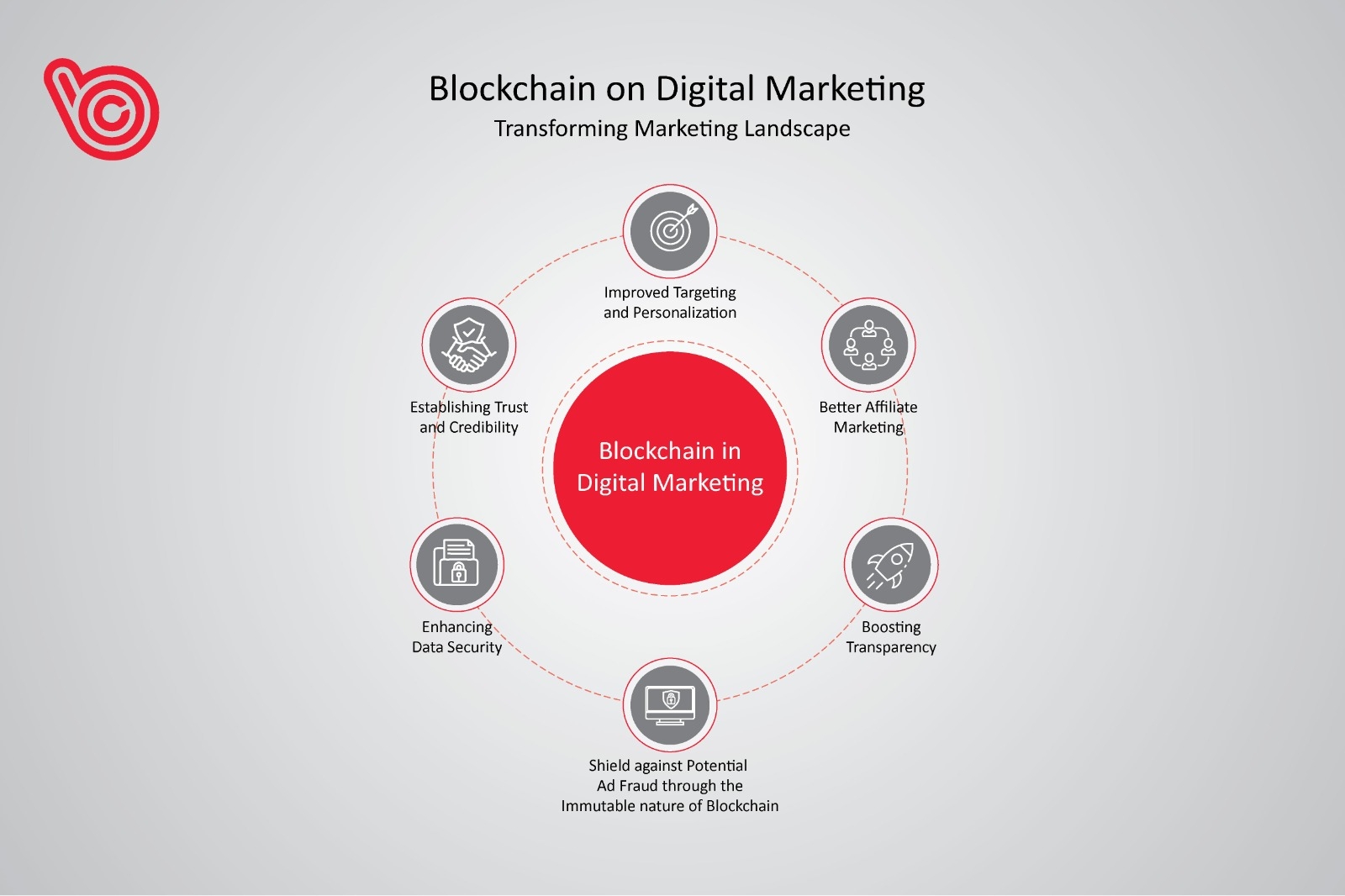
All brand, affiliate, and customer transactions are documented on an unchangeable ledger using blockchain technology. As a result, there is only one source of truth, guaranteeing that everyone has access to precise, up-to-date information.
• For Brands: Brands are able to confirm the legitimacy of conversions and validate the sources of traffic.
• For Affiliates: By giving affiliates insight into how their performance is monitored and rewarded, commission disputes are decreased.
Blockchain, for instance, may record every stage of a customer’s journey, from the first click to the last purchase, offering total transparency regarding attribution.
2. Accurate Attribution
Blockchain records each interaction in the customer journey, allowing for accurate attribution. It is possible to construct smart contracts to distribute commissions according to preset guidelines, like:
• First-click or last-click attribution.
• Weighted attribution models that assign different affiliates different amounts of credit.
By doing this, uncertainty is removed and equitable commission distribution is guaranteed.
3. Fraud Prevention
The immutability of blockchain makes data manipulation practically impossible. For example, blockchain-based verification can reduce click fraud and cookie stuffing. Additionally, smart contracts can automatically reject illegitimate traffic sources or conversions.
This drastically lowers fraud, saving companies and affiliates time and money.
4. Instant Payments with Smart Contracts
The usage of smart contracts, which are self-executing agreements that automate transactions based on predetermined criteria, is one of the most promising blockchain uses in affiliate marketing.
The smart contract automatically releases payment when an affiliate satisfies predetermined performance measures, removing delays, cutting down on administrative burden, and promoting trust between affiliates and brands.
For instance, without requiring human approval, the smart contract can immediately pay the commission to the affiliate’s digital wallet if they generate a sale.
5. Reduced Intermediary Dependence
Nowadays, a lot of affiliate programs use third-party networks to handle payments and monitor performance. By offering a decentralised system that manages tracking and payments transparently, blockchain eliminates the need for middlemen.
This lowers expenses while guaranteeing that data is safe and impenetrable.
6. Global Reach with Cryptocurrencies
Blockchain facilitates international cryptocurrency payments, which makes it simpler for firms to collaborate with affiliates across the globe. Affiliates don’t have to worry about exchange rates or transaction costs when they receive payments in digital currency.
Challenges to Blockchain Adoption in Affiliate Marketing
Blockchain has a lot of potential advantages, yet there are obstacles preventing its wider use:
1. Complexity of Technology
Blockchain implementation calls for infrastructure and technological know-how, which could be a deterrent for smaller companies.
2. Problems with Scalability
During times of heavy demand, public blockchains, like as Ethereum, may encounter high fees and sluggish transaction speeds.
3. Uncertainty in Regulation
Global adoption is hampered by regional differences in the legal status of cryptocurrencies and blockchain technologies.
4. Opposition to Change
Blockchain adoption may be resisted by affiliate networks and conventional platforms out of concern for disruption or loss of control.
5. Awareness and Education
Adoption rates may be slowed by brands’ and affiliates’ ignorance of blockchain’s operation or its advantages.
Case Studies: Blockchain in Affiliate Marketing
Several companies are already exploring blockchain solutions for affiliate marketing:
1. Attrace
Attrace is an affiliate marketing network built on blockchain technology that links affiliates and brands directly. It lessens dependency on middlemen by using smart contracts to guarantee equitable and transparent commission payments.
2. RefToken
RefToken uses blockchain technology to automate payments and track affiliates. It seeks to increase attribution accuracy and eradicate fraud by offering an open ledger of all affiliate interactions.
3. Adbank
Adbank is a platform for advertising that fights ad fraud by using blockchain technology. Although it isn’t just focused on affiliate marketing, affiliate campaigns can leverage its anti-fraud technologies to protect data integrity.
The Future of Blockchain in Affiliate Marketing
The use of blockchain technology in affiliate marketing is probably going to increase as it develops. The following are important themes to keep an eye on:
• Integration with AI: Using blockchain and AI together may improve performance analytics and fraud detection.
• Hybrid Solutions: To balance scalability and transparency, a combination of blockchain technology and conventional systems is used.
• Industry Standards: To guarantee uniformity and compliance, standardised methods for blockchain-based affiliate marketing are being developed.
Conclusion
By resolving persistent problems with fraud, attribution, and transparency, blockchain technology has the ability to completely transform affiliate marketing. Blockchain can make the ecosystem more equitable and effective for affiliates and brands alike by offering a decentralised, impenetrable structure.
The advantages of blockchain—better trust, precise attribution, and automatic payments—make it an appealing option for affiliate marketing in the future, even as obstacles like technological complexity and regulatory ambiguity still exist.
Early blockchain users will be in a strong position to spearhead the development of a more open and reliable affiliate marketing model as the sector develops. The question is not whether blockchain will change this dynamic business, but rather when.