
Introduction
Augmented Reality (AR) is changing how customers interact with things online, revolutionising the e-commerce business. AR enables buyers to evaluate things in their actual surroundings before making a purchase by superimposing digital content onto the real environment, linking the virtual and physical purchasing experiences. This immersive technology is an effective marketing tool that may boost consumer engagement, trust, and conversions. It’s more than simply curiosity.
In this article, we’ll look at the most recent augmented reality trends for e-commerce marketing to help firms stay ahead of the competition.
Why Augmented Reality is a Game-Changer for E-commerce
1. Enhanced Shopping Experience
AR allows customers to trial before they purchase, which reduces uncertainty and improves the purchasing experience. Whether it’s previewing furniture in a space or seeing how a pair of spectacles appears, AR delivers a personalised trip for the customer.
2. Increased Consumer Confidence
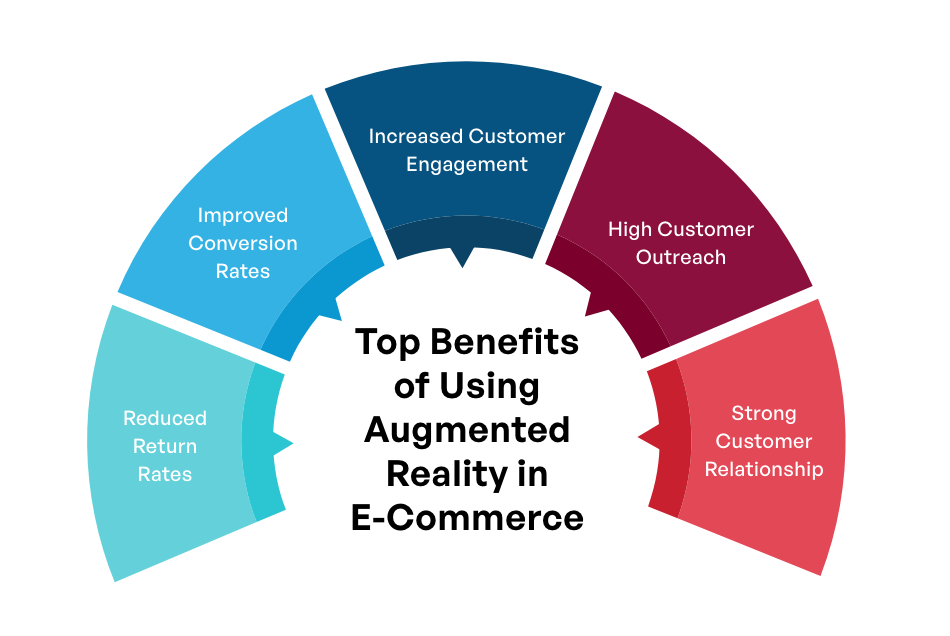
Seeing a product in real time and in context eliminates concerns about size, fit, and quality. This lowers return rates and increases buyer confidence.
3. Greater Engagement
AR experiences are dynamic and enjoyable, leading customers to spend more time on an e-commerce website or app.
4. Competitive Differentiation
AR experiences are dynamic and enjoyable, leading customers to spend more time on an e-commerce website or app.
Trends to Watch in AR for E-commerce Marketing
1. Virtual Try-Ons
In sectors including fashion, cosmetics, and eyeglasses, virtual try-ons are becoming commonplace. Customers may preview how items will appear on them by using augmented reality (AR), which adds personalisation and dependability to online buying.
• For instance, Sephora’s Virtual Artist lets customers use the cameras on their smartphones to try on cosmetics like lipstick hues and eyeshadow palettes.
• Future Potential: By taking into consideration subtleties like skin tone and lighting, sophisticated face recognition technology may improve the accuracy of virtual try-ons.
2. AR-Powered Product Visualization
AR enables customers to see how a product will fit and seem in their environment, which is useful for huge things, electronics, and home products. This function streamlines the decision-making process, from arranging furniture to determining if an appliance blends in with the décor.
• For instance, consumers may visually arrange furniture in their homes using the IKEA Place app to make sure it fits perfectly before making a purchase.
• Future Potential: These encounters will get more smoother and more immersive when AR devices like smart glasses proliferate.
3. Interactive Packaging
Product packaging may be turned into an interactive marketing tool with AR. Additional material, including guides, deals, or captivating narratives, may be accessed by scanning a QR code or by utilising an app that supports augmented reality.
• As an illustration, the wine company 19 Crimes employs augmented reality labels that come to life to narrate tales about historical figures that are shown on their bottles.
• Future Potential: More companies may use augmented reality (AR) into their packaging to provide distinctive unpacking experiences or interesting methods to tell their brand stories.
4. Gamification with AR
AR elevates gamification, a potent technique for interacting with customers. In addition to providing entertainment, brands are developing augmented reality games and challenges that increase traffic and promote sales.
• For instance, treasure hunts and location-based augmented reality games were used by marketers to advertise their products as a result of Pokémon GO’s AR-driven popularity.
• Future Prospects: E-commerce companies may integrate augmented reality (AR) gamification into their loyalty programs, which allow users to accrue points or prizes via interactive experiences.
5. Social Commerce with AR
AR shopping capabilities are being included into social media sites like Instagram, Snapchat, and TikTok, enabling users to virtually test things and buy them without ever leaving the app.
• As an illustration, Snapchat’s AR lenses let users try on items like trainers or sunglasses before making purchases straight from the app.
• Prospects for the Future: By further integrating AI, AR advertisements may be tailored to user preferences, improving targeted advertising.
6. Immersive Retail Experiences
Immersion AR experiences are being developed by brands to mimic or improve in-store shopping. Interactive displays, virtual retail tours, and customised shopping assistants are a few examples.
• As an illustration, Gucci introduced an augmented reality (AR)-powered sneaker try-on experience that lets customers see how shoes appear on their feet via its smartphone.
• Future Potential: By fusing digital and physical retail settings, augmented reality (AR) and virtual reality (VR) might provide hybrid purchasing environments.
Challenges in Adopting AR for E-commerce
1. High Initial Investment
It takes a lot of resources to build AR technology, from hardware to app creation and upkeep. Without outside assistance, small firms may find it difficult to implement AR.
2. Technical Compatibility
It might be difficult to guarantee that AR experiences function flawlessly on many platforms and devices. Users may become discouraged by errors or slow load times.
3. User Education
Some people can be reluctant to adopt AR technology or unfamiliar with it. For it to be widely adopted, it is essential to educate people about its advantages and usability.
How to Implement AR in Your E-commerce Strategy
1. Start Small
Start with one AR feature, like virtual try-ons or AR-powered product visualisation, that fits your items and the demands of your audience.
2. Collaborate with AR Platforms
To expedite deployment, work with specialised AR providers or well-known AR platforms like Instagram and Snapchat.
3. Pay Attention to Mobile Optimisation
Make sure your AR features are user-friendly and responsive to mobile devices, as the majority of AR experiences are accessible through smartphones.
4. Evaluate and refine
To optimise ROI, track user interactions with AR features, get feedback, and improve your strategy.
The Future of AR in E-commerce Marketing
With developments in AI, 5G connectivity, and AR hardware influencing its development, the future of AR in e-commerce is bright.
New Developments in Trends:
• AI-Enhanced AR: By examining user preferences and customising suggestions, AI may improve AR experiences.
• AR Shopping Hubs: Virtual shopping centres that allow customers to browse several brands in an augmented reality setting could become commonplace.
• Wearable AR Devices: Customers may soon be able to enjoy AR experiences hands-free thanks to investments made by firms like Apple and Meta in AR spectacles.
Benefits of Early Adoption
Early AR adoption by brands will have several benefits:
• Brand Differentiation: Provide innovative experiences to stand out in a congested market.
• Increased Conversion Rates: Use immersive, tailored experiences to engage and persuade cautious customers.
• Increase Customer Loyalty: Make lasting impressions to entice clients to return.
Conclusion
No longer only a future idea, augmented reality is a game-changing technology that is changing e-commerce marketing. AR gives marketers the chance to interact with consumers in previously unthinkable ways, from gamified shopping experiences to virtual try-ons.
The companies who invest in this cutting-edge strategy will be the ones that prosper in the cutthroat world of e-commerce as augmented reality technology becomes more widely available and incorporated into daily life. The moment has come to embrace AR and realise its full potential, regardless of how big or little your business is.